Yerba Buena

Review
Frustration and Glitches in San Francisco
by Jordan Helsley
reviewed on PC
The Sombre 70s
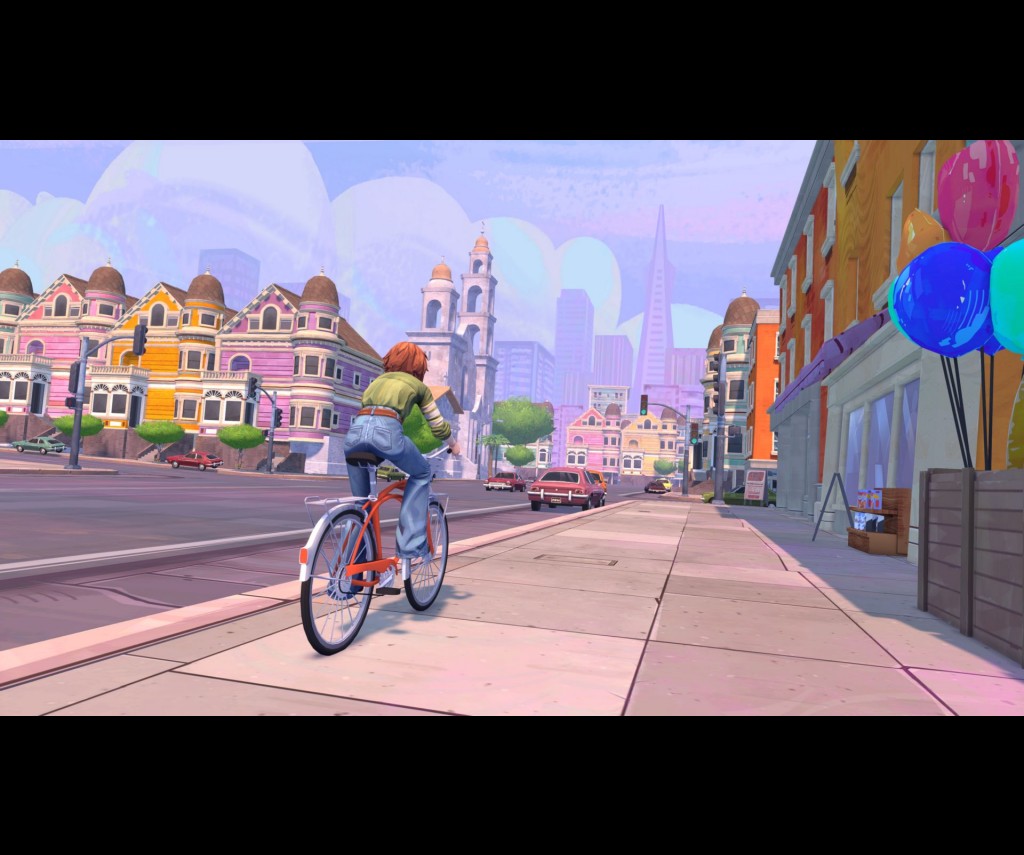
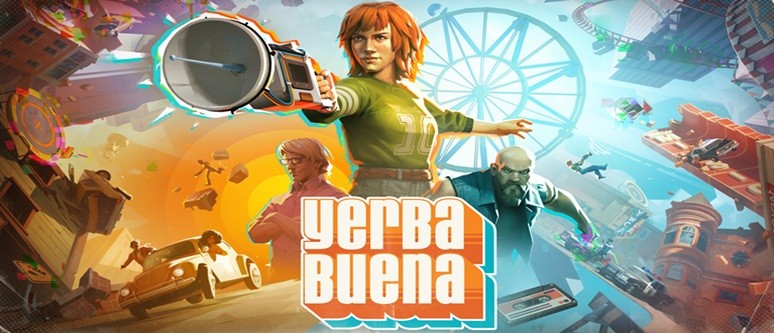
Sweeping changes of the 1970s frustrate the citizens of San Francisco. A giant tech company has moved in, and its corpo-hippie CEO is causing trouble with plans to build a skyscraper in the beloved Yerba Buena Park. The streets have their own turmoil, with a superpowered biker gang robbing banks and otherwise terrorizing everyone. Beyond their primary worries, they face glitches: otherworldly shimmers around objects that immobilize them. I guess you needn't worry about a biker gang stealing from your store if the product can't get stocked because the delivery truck is glitched and the delivery guy is stuck in a T-pose.
Barb is struggling in this chaotic city, just looking for a job to make a living. The short preamble follows down-on-her-luck Barb as she gets some help from Russell and his taxi. The two chat about the town for a bit as they cruise, before Bear, leader of The Bay Angels, carjacks Russell, leaving Barb by the wayside. After Bear crashes a short way up the road and escapes with Russell as hostage, Barb grabs his locked briefcase, heads to her friends’ convenience store, and the game begins in earnest.
One Puzzle, Many Pictures
Yerba Buena throws a lot of stories out there, all in the opening chapter, and doesn't know exactly what to do with them. Initially, there's a conventional meta-layer, where your friends accost you for exploring the store instead of trying to unlock the briefcase while your friend, the hostage, is across the road as Barb comments she doesn’t know why she's wasting time. There's the conventional story: unlock the briefcase and trade whatever's inside for your friend. There are higher-level meta-conversations on game development that come from collectibles. The treatment of veterans and even the subjectivity of "evil" get a mention. And somewhere in the middle, and most prominently, it questions whether an AI can become so advanced that it is immoral to shut it down.
Most of these themes get nothing but a passing mention because the exposition moves at light speed. The game introduces one concept right on the heels of another with no time to process or consider how the preceding information ties into the world. It's clear that they put a ton of effort and thought into the setting, characters, and story beats; it simply doesn't fit together cleanly. Part of that is because of the main story, but the other part feels more like a lack of focus. The story is likewise let down by lacklustre voice acting. The lines come out very stilted and rarely feel appropriate for the situation, which often requires emotional weight because of the mostly humorless nature overall.
Real and Surreal
It's a shame, because Yerba Buena's version of San Francisco (and the adjacent worlds the game takes the player) is fun to be in. The streets are lively with vehicular activity, the buildings have pedestrians in them, and things like steam vents and moving shop signs add to the feeling that this is a real, albeit stylized, place. That cartoon styling fits really well with some of the inherent wackiness that comes with solving the game's puzzles, as does the music. Getting stuck on a puzzle isn't so bad when the looping background noise is enjoyable.
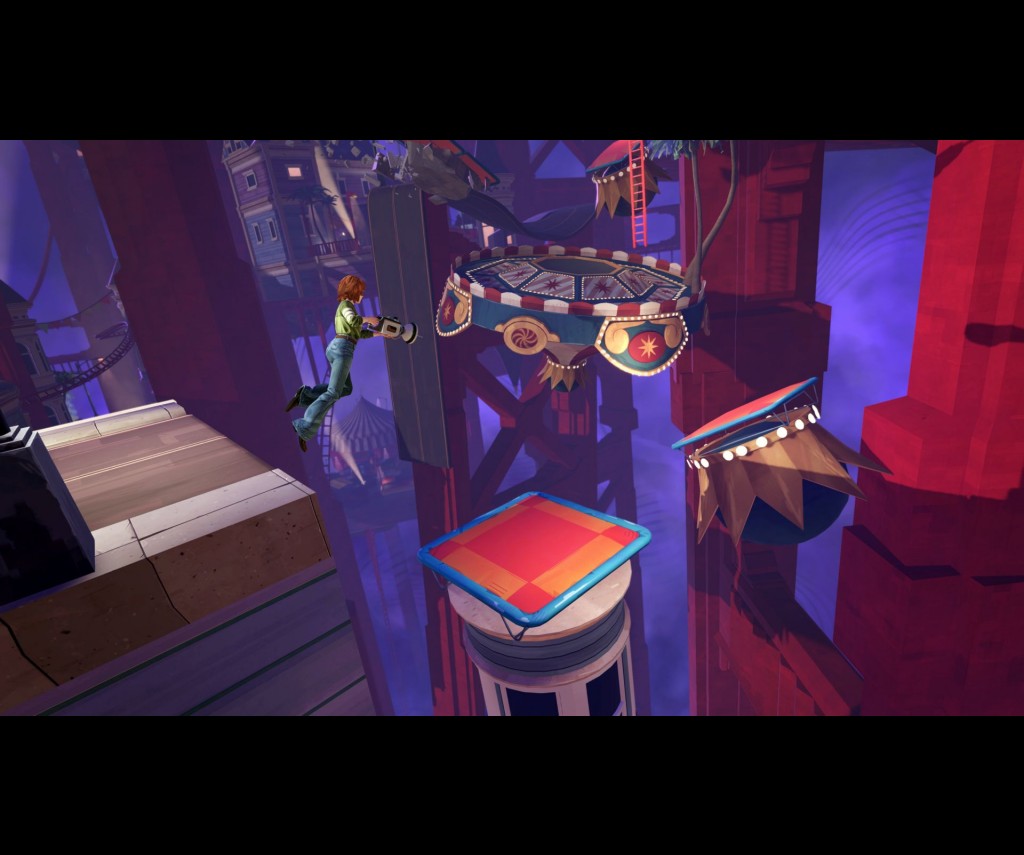
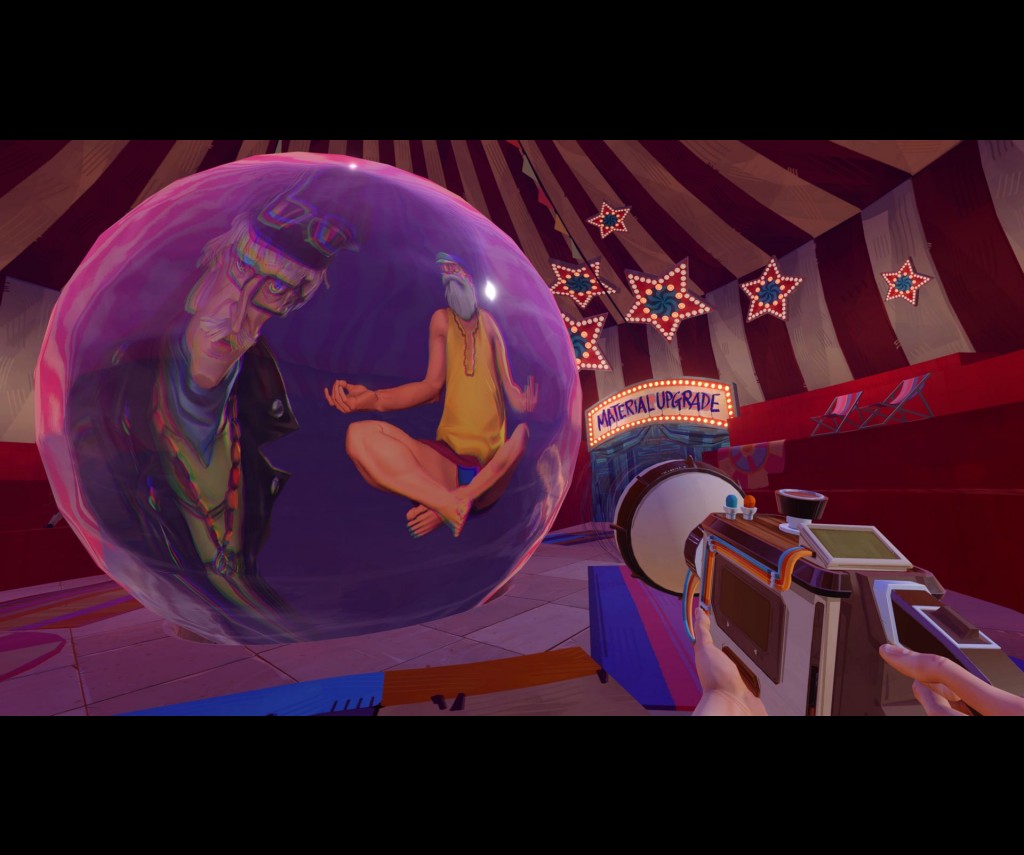
The other main area that Barb spends her time in is a digital carnival world. It's distinct and slightly bizarre, which is how the game gets away with puzzles that are truly not bound by realism while also leaning into the sort of mind-bending feelings the actual puzzle mechanics invoke. As far as balance goes, some of the hardest puzzles are in here because they skew much closer to one solution, while the puzzles in San Francisco proper are more fun to solve because they lean into creativity a bit more.
Getting Mechanical
But does any of that really matter? Yerba Buena is a puzzle game, after all, and could conceivably get by just fine on its puzzle merit. It's possible that it could, but it doesn't. The puzzle design, gameplay pacing, and overall polish of the game cement that game's status, rather than elevate it.
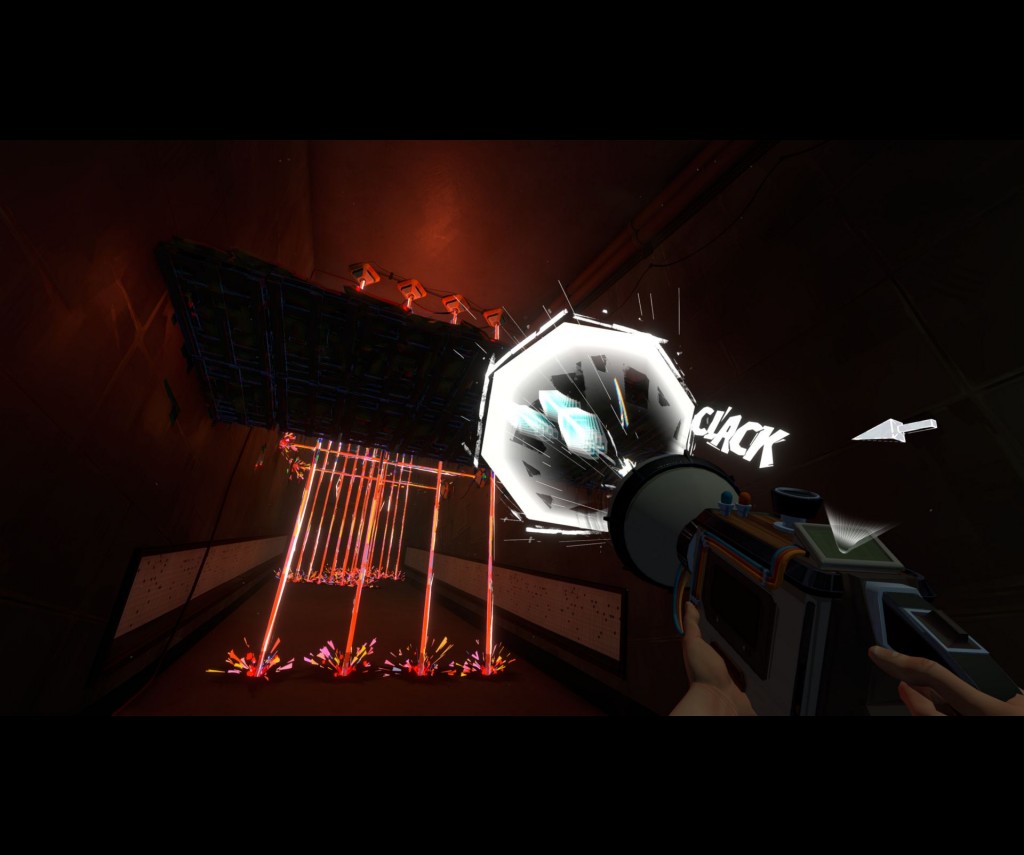
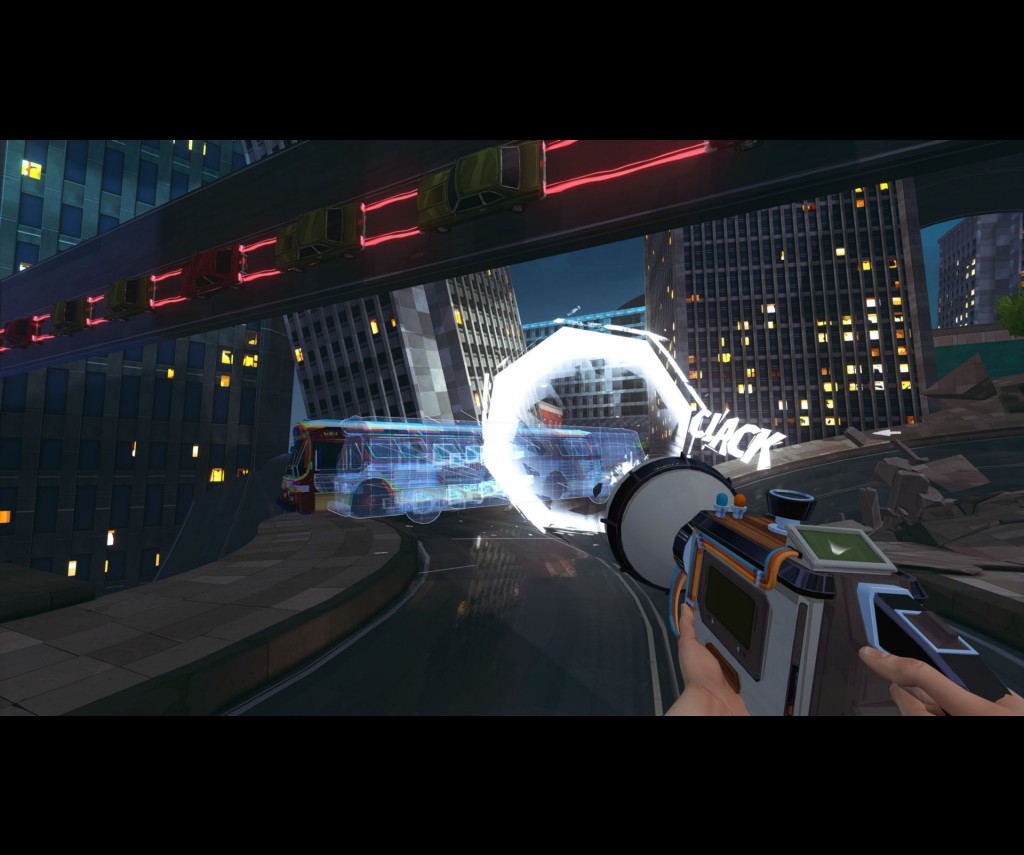
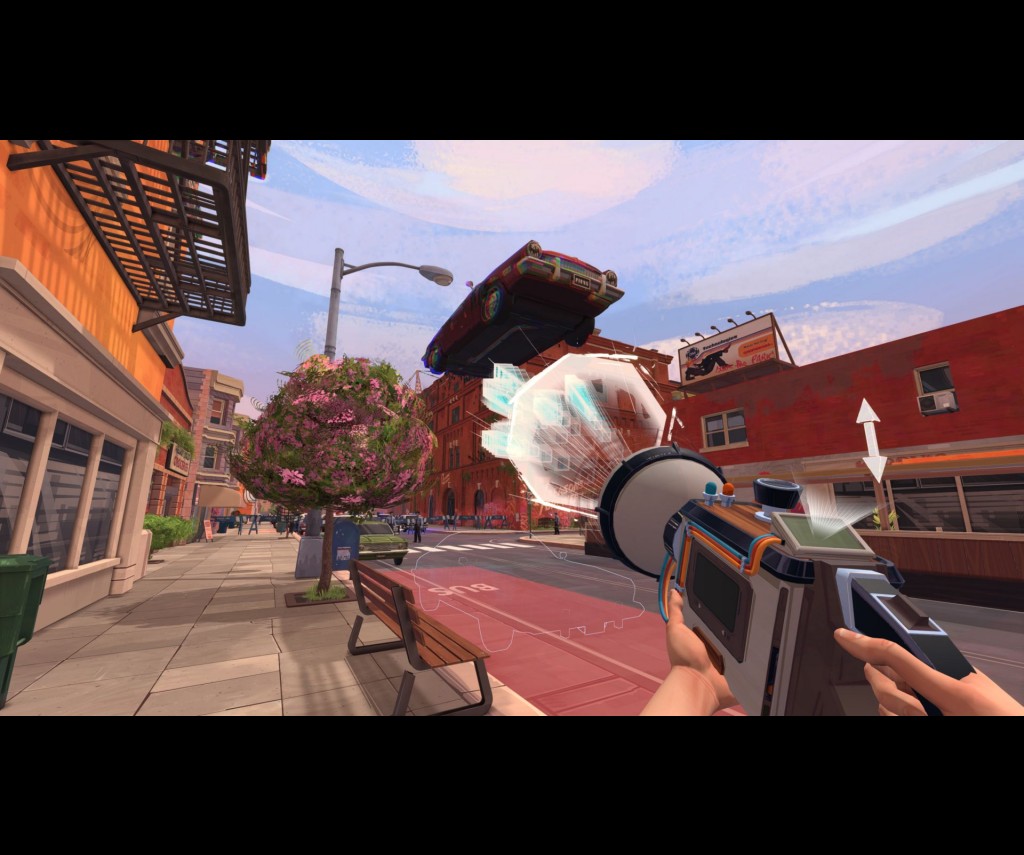
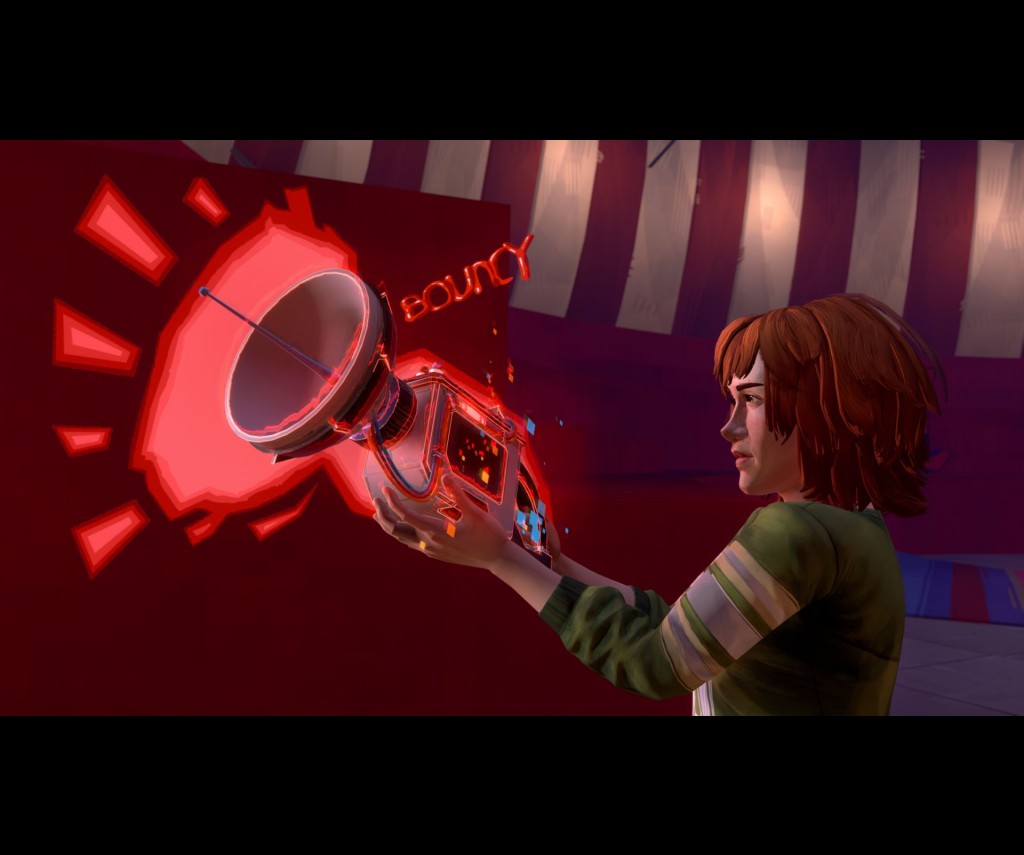
Barb interacts with the world using The Oscillator, a gun-like device that can copy physical properties from one object to a glitched object. This starts with motion. Copy the directional movement of a car driving by and paste it onto a nearby fire escape, and you've got yourself a moving platform. Later, other properties surface for this loop: "airiness" (whether something is a solid or a gas), bounciness, and stickiness. Copy a trampoline's bounce, put it on a car, bounce up to the moving fire escape and stick to the bottom to ride along, and reset it all if you mess up.
Putting the Pieces Together
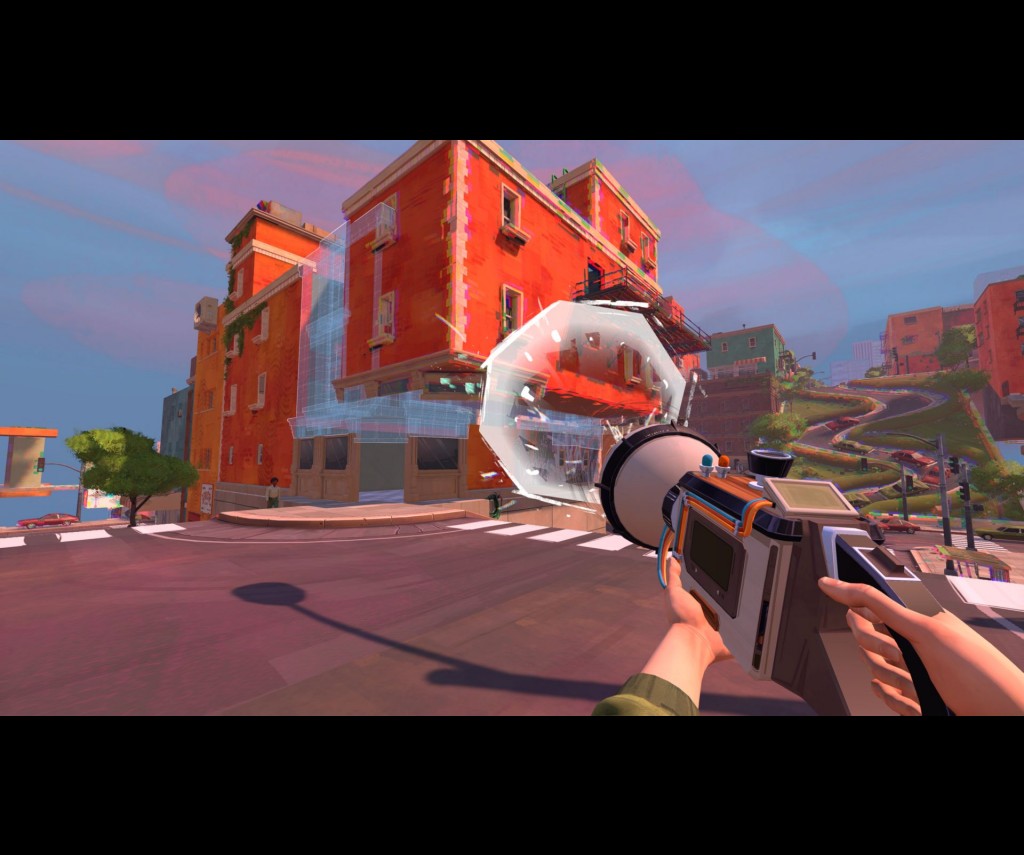
The combination of properties allows one later chapter in particular to really show what the game is capable of. In a fairly large and open area of San Francisco, you need to move about the space and access certain rooftops. This allows for a ton of creativity in solving several platforming issues, and feels satisfying just about every time. The quick reset is, of course, key to that feeling, and also the trial-and-error nature of the game's puzzles overall. Many of the buildings have a glitch applied to them, and the ways you can manipulate them depend on how much of the building is affected. The top two floors of an apartment can't move down or rotate, for instance, but they can slide over the adjacent road. There are glimpses of this in the game's first playable chapter, but it isn't until the 11th that it truly shines, and it doesn't again afterwards. With 14 chapters total (some of which are just cut scenes), it will inevitably feel disappointing that the best was saved for (almost) last.
The other gameplay areas just do not have this charm. Most of the other solutions are trivially easy (as long as you don't completely miss glitched objects like I did more times than I want to admit). More often they're showing you how to get the solution, rather than showing you the puzzle and saying "figure it out." Something like an area with one leftward-moving object, one going up and down, and two glitched objects. It doesn't feel satisfying to solve that, and they're the majority. Some set-piece moments that further trade challenge for spectacle stand out at the high end of the spectrum for these, and the low end includes platforming segments that require upside-down jumps off spinning pillars, so the average feels a lot closer to the bottom.
Yerba Bajona
Mostly, Yerba Buena is snappy enough to make trial and error, and even failure, minor bumps on the road to progress. It lets you move at your own pace, more often than not, right up to the end. Things get trickier with the final boss fight, which is clever in the ways it asks you to put together your knowledge of the mechanics and even the options available for valid solutions, but grinds gameplay to a screeching halt. Because Barb cannot attack in any conventional way, the final showdown relies entirely on countering the boss' attacks with familiar mechanics. That also means you can spend an enormous amount of time waiting for the right attack to come your way. It's compounded if you die in the second or third phase and have to start over, and exacerbated even more if the game outright crashes.
The final boss battle and the resulting story wrap-up represent Yerba Buena overall. It has the potential to really push you to come up with novel solutions to the puzzles. The mechanics are truly inventive and can create some really inspired workarounds, but the overall design does more than just prevent them from shining; it actively holds them back at times. As if to replicate the game world, it ends up further hindered by its own glitches as well. One chapter of good puzzling isn't quite enough to redeem its faults, so I'm afraid it might end up like the settlement it takes its name from: wiped off the map in favour of something else.
As always, follow Hooked Gamers on Instagram for news updates, reviews, competitions and more.
6.0
fun score
Pros
Inventive puzzle mechanics that push the player creatively at times in a well-realized world.
Cons
Too many telegraphed and simple puzzles, voice acting that rarely feels appropriate, wrapped in a story that is simultaneously rushed and unfocused.